
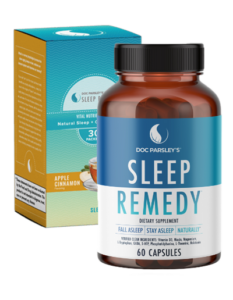
DOC PARSLEY’S
SLEEP REMEDY

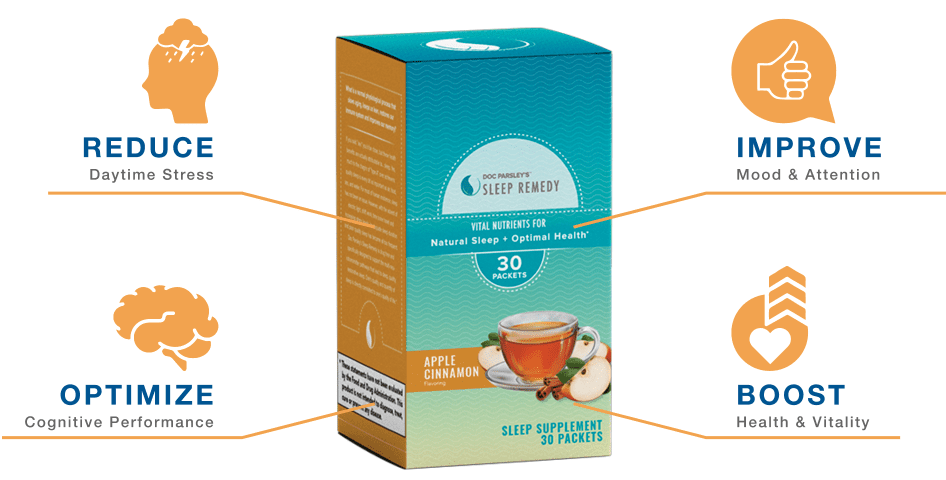
Reduce Daytime Stress
Improve Mood & Attention
Regulate Appetite Control
Boost Health & Vitality
Optimize Cognitive Performance
Our body needs a specific amount of sleep for optimal functioning. Insomnia and poor sleep can increase risk of serious health conditions including

Weight loss

Depression

Stomach pain

Heart attack
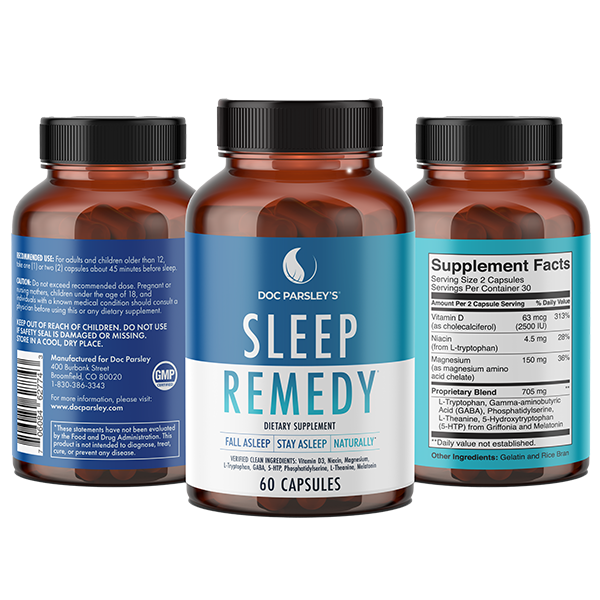
With Doc Parsley’s Sleep Remedy all Natural Supplement Today
Doc Parsley’s Sleep RemedyEnjoy a Restful Night’s Sleep
Doc Parsley’s Sleep Remedy is an all-natural sleep aid, that includes a blend of calming nutrients, proven to help in falling asleep faster & optimizing sleep patterns. Doctor formulated and recommended, non-habit forming & safe for daily use, Doc Parsley’s Sleep Remedy supports deep, regenerative sleep to ensure you wake up refreshed & energized.

1
Reduce Stress & Anxiety For Deep Relaxation
2
Supports Healthy Sleep
3
Enhance Mental Clarity, Focus & Energy Levels
Doc Parsley’s Sleep remedy is made from 100% all natural nutrients. Including L-Theanine, Magnesium and GABA. All these nutrients combined make our supplement safe and effective.

100% Natural Ingredients
Melatonin & Valerian Extracts
Melatonin & Valerian Extracts

Non-Addictive Blend
100% Drug-Free Promise
100% Drug-Free Promise

Overnight Application
To fall asleep & stay asleep
To fall asleep & stay asleep

Easy To UseEasy To Use
Simply open, pour & drink
Simply open, pour & drink
Sleep more restfully and wake up ready to take on the world! Doc Parsley designed his Sleep Remedy to improve cognitive function and help improve memory, concentration, and your overall sense of well-being.
Save Instantly!
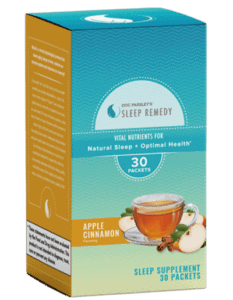
The Science BehindSleep Remedy

Doc Parsley’s Sleep Remedy is an all-natural sleep aid, that includes a blend of calming nutrients, designed to help in falling asleep faster & optimize sleep patterns. Doctor formulated and recommended, non-habit forming & safe for daily use, Doc Parsley’s Sleep Remedy is designed to support deep, regenerative sleep to ensure you wake up refreshed & energized.
How Doc Parsley’s Sleep Remedy Works to Help You Sleep Better
1
INCREASE RELAXATION
Sleep Remedy’s ingredients go the extra mile to help with relaxation and promote deeply restorative sleep.
Sleep Remedy’s ingredients go the extra mile to help with relaxation and promote deeply restorative sleep.
2
OPTIMIZE SLEEP CYCLES
Sleep Remedy was designed to help optimize your sleep cycles so you can get the full benefit of your time in bed.
Sleep Remedy was designed to help optimize your sleep cycles so you can get the full benefit of your time in bed.
3
BALANCE BRAIN CHEMISTRY
Sleep Remedy was intentionally created to help restore important brain nutrients needed for great sleep.
Sleep Remedy was intentionally created to help restore important brain nutrients needed for great sleep.

All Natural Ingredients
A Drug-Free Solution For A Great Night’s Sleep
Most people have been led to believe they’re getting good sleep when they’re using sleep drugs (pharmaceuticals, over the counter drugs, even alcohol.) Sleep drugs do in fact put your body in a state of unconsciousness, but being unconscious is NOT the same thing as getting quality sleep.
To boot, many pharmaceutical products are habit-forming and can promote unhealthy side effects including groggyines and sluggishness. If you take sleep drugs, you won’t feel rested, you won’t feel rejuvenated, and ultimately, you’re setting yourself up for potential health problems down the road.
Sleep Remedy utilizes only the best, natural ingredients so you can get deeply restorative, drug-free sleep.
To boot, many pharmaceutical products are habit-forming and can promote unhealthy side effects including groggyines and sluggishness. If you take sleep drugs, you won’t feel rested, you won’t feel rejuvenated, and ultimately, you’re setting yourself up for potential health problems down the road.
Sleep Remedy utilizes only the best, natural ingredients so you can get deeply restorative, drug-free sleep.
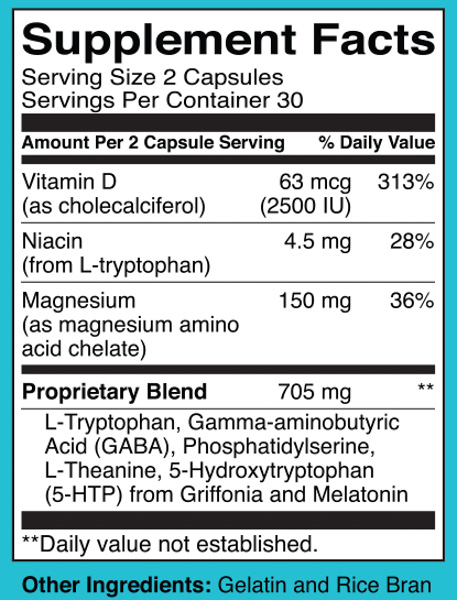

Melatonin
Excreted naturally by your pineal gland. Helps your body prepare for sleep
Excreted naturally by your pineal gland. Helps your body prepare for sleep

Magnesium
Regulates neurotransmitters and calms your nervous system while normalizing sleep-wake cycles.
Regulates neurotransmitters and calms your nervous system while normalizing sleep-wake cycles.

L-Theanine & GABA
Gama-Aminobutyric Acid (GABA) enables the body and mind to relex and fall asleep, and to sleep soundly throughout the night. L-Theanine enhances the activity of GABA.
Gama-Aminobutyric Acid (GABA) enables the body and mind to relex and fall asleep, and to sleep soundly throughout the night. L-Theanine enhances the activity of GABA.

Tryptophan
It has been scientifically shown that tryptophan forms the basis of brain chemicals associated with sleep.
It has been scientifically shown that tryptophan forms the basis of brain chemicals associated with sleep.

Vitamin D3
Regulates calcium and phosphorus absorption, and facilitates normal immune function.
Regulates calcium and phosphorus absorption, and facilitates normal immune function.

PhosphatidylserineProven to decrease the stress hormone cortisol in your bloodstream. Elevated cortisol is known to interfere with sleep quality.
Our body needs a specific amount of sleep for optimal functioning. Insomnia and poor sleep can increase risk of serious health conditions including

The hormones in your brain and body–that lead to your sense of wellbeing–are balanced during sleep.

We’ve all experienced scattered attention and increased worry after a sleepless night. Getting a good night’s sleep decreases the stress hormones associate with anxiety.

After a good night sleep, you will wake up refreshed, energized & ready to take on the day ahead.

The vitamins and nutrients in Sleep Remedy help to protect brain cells from oxidative damage and toxins. Keeping your neurons in top condition improves memory and mental performance.
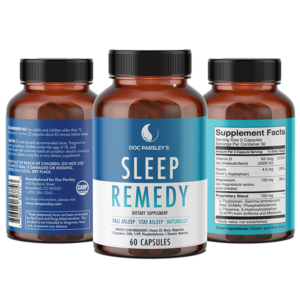
Choose The Natural Solution For Better Sleep

All Natural Formula
Doc Parsley’s Sleep Remedy is made with a blend of 100% all natural Ingredients including vitamins, minerals and amino acids making it completely safe.
Doc Parsley’s Sleep Remedy is made with a blend of 100% all natural Ingredients including vitamins, minerals and amino acids making it completely safe.
Non-Habit Forming
Doc Parsley’s Sleep Remedy naturally encourages the body’s sleep cycles, ensuring you can use it as much as you want.Non-Habit Forming Doc Parsley’s Sleep Remedy naturally encourages the body’s sleep cycles, ensuring you can use it as much as you want.
Doc Parsley’s Sleep Remedy naturally encourages the body’s sleep cycles, ensuring you can use it as much as you want.Non-Habit Forming Doc Parsley’s Sleep Remedy naturally encourages the body’s sleep cycles, ensuring you can use it as much as you want.
Available Without Prescription
Doc Parsley’s Sleep Remedy can be purchased online from the comfort of your home. No prescriptions or long waiting lines.Available Without Prescription Doc Parsley’s Sleep Remedy can be purchased online from the comfort of your home. No prescriptions or long waiting lines.
Doc Parsley’s Sleep Remedy can be purchased online from the comfort of your home. No prescriptions or long waiting lines.Available Without Prescription Doc Parsley’s Sleep Remedy can be purchased online from the comfort of your home. No prescriptions or long waiting lines.
Affordable
Sleep Remedy is reasonably priced and promotes health benefits that can improve every area of your life.Affordable Sleep Remedy is reasonably priced and promotes health benefits that can improve every area of your life.
Sleep Remedy is reasonably priced and promotes health benefits that can improve every area of your life.Affordable Sleep Remedy is reasonably priced and promotes health benefits that can improve every area of your life.


Includes Harmful Chemicals
Sleeping pills often contain harsh chemicals & synthetic ingredients that may cause a range of side-effects such as loss of memory, jitters, nausea, headaches & even anxiety.Includes Harmful Chemicals Sleeping pills often contain harsh chemicals & synthetic ingredients that may cause a range of side-effects such as loss of memory, jitters, nausea, headaches & even anxiety.
Sleeping pills often contain harsh chemicals & synthetic ingredients that may cause a range of side-effects such as loss of memory, jitters, nausea, headaches & even anxiety.Includes Harmful Chemicals Sleeping pills often contain harsh chemicals & synthetic ingredients that may cause a range of side-effects such as loss of memory, jitters, nausea, headaches & even anxiety.
Addictive & Habit Forming
Sleeping pills alter the body’s sleep cycles which may lead to dependence and long-term health problems.Addictive & Habit Forming Sleeping pills alter the body’s sleep cycles which may lead to dependence and long-term health problems.
Sleeping pills alter the body’s sleep cycles which may lead to dependence and long-term health problems.Addictive & Habit Forming Sleeping pills alter the body’s sleep cycles which may lead to dependence and long-term health problems.
Prescription Needed
Many sleep aids are scheduled drugs and can be only purchased after a doctor visit and prescription.Prescription Needed Many sleep aids are scheduled drugs and can be only purchased after a doctor visit and prescription.
Many sleep aids are scheduled drugs and can be only purchased after a doctor visit and prescription.Prescription Needed Many sleep aids are scheduled drugs and can be only purchased after a doctor visit and prescription.
Expensive
The addictive quality of sleep drugs can be prohibitively costly, not only to your wallet, but also your health.Expensive The addictive quality of sleep drugs can be prohibitively costly, not only to your wallet, but also your health.
The addictive quality of sleep drugs can be prohibitively costly, not only to your wallet, but also your health.Expensive The addictive quality of sleep drugs can be prohibitively costly, not only to your wallet, but also your health.
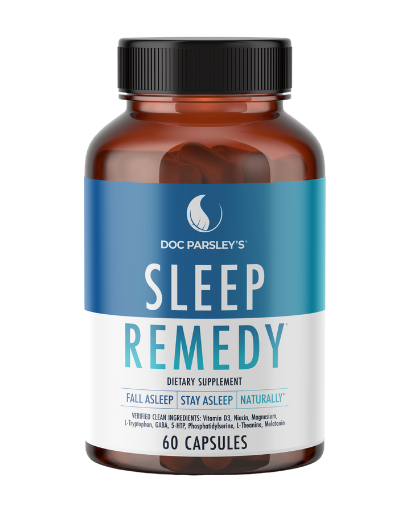

STEP 01
TAKE SLEEP REMEDY BEFORE BEDTIME
No complicated contraindications here. Just take the recommended amount of Sleep Remedy about 30 minutes before bedtime.

STEP 02
FALL ASLEEP FASTER & SLEEP LONGER
Doc Parsley’s Sleep Remedy helps your body relax and drift off for a quality night of sleep that can result in a more productive day.

STEP 03
WAKE UP REFRESHED WITH MORE ENERGY
The drug-free formula means no grogginess, no sluggishness, no catch. Just deeply restorative sleep. For best results, use regularly.
Sleep Amazing
& Wake Up Refreshed
We stand behind the quality of our ingredients and the effectiveness of our product. We’re confident you’ll love how you feel when you start getting great sleep. Save Instantly!
Save Instantly!

PREMIUM 60 DAY 100%
MONEY-BACK GUARANTEE
if at any point within the next 60 days from now you find that your results are anything short of heavenly, please tell us in an email or a phone call and you will get a complete refund.
On top of that, you can keep your bottles. That’s how confident we are that this formula will do wonders for you.
On top of that, you can keep your bottles. That’s how confident we are that this formula will do wonders for you.
Sleep Remedy’s Client Success Stories
Join the countless Doc Parsley’s Sleep Remedy customers who have unlocked the secret of better sleep and better health!

“I can’t even begin to explain how thankful we are that we found Sleep Remedy. After not sleeping in a sound manner for over a year this has been just so absolutely amazing. Performance and showing up with authenticity is such an important part of our lives and our business and no matter how hard you work to push through it’s just impossible without proper sleep. We are finally getting back on track and are thankful to have found this to be a dynamic contributing factor!”
Michael Caron, M.Ed.
Founder & CEO, Get Burly

“As a firefighter, shift work creates chronic sleep deprivation in my life. Doc Parsley’s Sleep Remedy allows me to get the best quality sleep I can when at home. The new formula is fantastic and I am sleeping deeper than ever before.”
James Geering
Firefighter, Behind the Shield Podcast

“My whole life I’ve struggled with sleep! Shift work has not helped that! Since I’ve started taking Sleep Remedy I’ve slept 8 straight hours every night. I’ve finally found something that is natural and leaves me not feeling “hungover” in the morning. I can still go to work and perform at my best! Since I’ve taken it I’ve not had an artificial sleep inducing medication since. I highly recommend this and will keep taking it as long as I’m working.”
EN
Shift worker
Sleep Amazing
& Wake Up Refreshed
Sleep more restfully and wake up ready to take on the world! Doc Parsley designed his Sleep Remedy to improve cognitive function and help improve memory, concentration, and your overall sense of well-being.